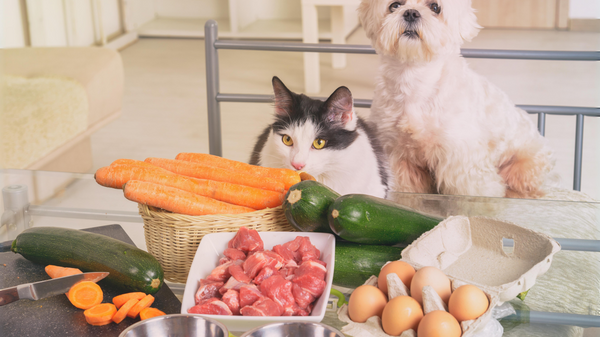
A healthy dog can have a little plain turkey (no skin or bones) and plain vegetables such as carrots, parsnips, green beans, peas and Brussels sprouts at Christmas. Keep chocolate, mince pies, Christmas pudding and Christmas cake, anything with onion or garlic (including gravy and stuffing), cooked bones, alcohol, macadamia nuts and sugar-free sweets well out of reach. If your dog eats any of those, contact your vet for advice.
Below is a practical guide to the British Christmas table: what is safe, what is not, how much is sensible, and what to do if something goes wrong on the day.
The safe list: what your dog can share
If your dog is healthy and not allergic to them, these are safe in small amounts, cooked plain without butter, oil, glazes or sauce:
- Turkey: lean white meat, skin removed and every bone taken out. The dark meat can be too rich.
- Lamb or salmon: plain meat with no bones or string; salmon fillet rather than smoked salmon.
- Carrots, parsnips and swede: boiled or steamed, or mashed with nothing added.
- Green beans, peas and broccoli: plain, boiled or steamed.
- Brussels sprouts: plain, and just a couple.
- Potatoes: plain new potatoes, sweet potato, or mash without butter.
Portion size matters more than people expect. A spaniel's share of Christmas dinner is a couple of tablespoons, not a plate. Introduce anything new slowly, as too much can upset their tummy, and reduce their usual meal to match so the extra food doesn't add up over the festive fortnight.
The danger list: keep these off the floor and out of reach
- Chocolate: toxic to dogs, and even small amounts can cause serious illness. Watch out for selection boxes under the tree, chocolate coins and chocolate tree decorations.
- Mince pies, Christmas pudding, Christmas cake and stollen: these contain raisins, currants and sultanas, which can cause severe kidney failure in dogs.
- Grapes: just as dangerous as raisins, and even a few can cause kidney failure. Keep them off the cheese board and fruit bowl within reach.
- Onions, garlic, leeks, shallots and chives: poisonous to dogs whether cooked or raw, and can cause severe anaemia. They hide in gravy, stuffing, bread sauce and many sauces, so gravy on their biscuits is not a safe treat.
- Cooked bones: a choking hazard that can also block or tear the gut. Bag the turkey carcass and take it straight to the outside bin.
- Alcohol: toxic to dogs. Watch the half-finished glass on the coffee table and boozy desserts.
- Macadamia nuts: can cause tiredness, weakness in the back legs, a raised temperature, tremors and stiffness.
- Sugar-free sweets: many contain xylitol, a sweetener that is poisonous to dogs. Candy canes are a common festive culprit.
- Leftovers: they can hide toxic ingredients, and mouldy leftovers can make dogs ill. Foods high in fat or salt, such as turkey skin, pigs in blankets and roast potatoes, are best avoided too.
Non-food hazards belong on the same list. Poinsettia, holly, mistletoe, ivy and potpourri are toxic to dogs, and tinsel, baubles, wrapping paper and ribbon can cause a blockage if swallowed.
What about milk and dairy?
Cream, brandy butter and cheese boards are rich and fatty, so they're best kept off your dog's plate. If you'd like your dog to have something that feels like a treat, choose something made for pets. Our Zero-Lactose Goat Milk is a complementary food for dogs and cats, and you can stir a little into their usual dinner on Christmas Day. As with any new food, start with a small amount. For more on milk and young dogs, see why your puppy gets sick from regular milk.
A calm Christmas Day plan
Most festive accidents happen when the house is busy and nobody is watching the dog. A simple plan helps.
- Agree one rule for the whole family: no feeding from the table, and only the dog's "Christmas plate" from one person. Tell visiting children and grandparents early.
- Clear surfaces before you sit down. Selection boxes under the tree, mince pies on the coffee table and handbags on the floor with chocolate inside are the usual culprits.
- Keep to their routine. Feed and walk them at the usual times and give them plenty of rest. A long morning walk before guests arrive helps many dogs settle.
- Give them a quiet space. A den or bed in a calm room, with food, water and familiar toys, gives them somewhere to retreat when it gets loud.
- Plan for the bin. Turkey carcasses and foil trays are irresistible. Use a lidded bin or take rubbish straight outside.
If your dog finds visitors, crackers and party poppers stressful, start preparing a week or two ahead, as you would for fireworks. Our Bonfire Night calm plan covers dens, sound and routine, and the same steps work at Christmas. Some owners also use Pambros Calming Chews, made with chamomile, valerian and L-tryptophan to support a calm, relaxed mood on busy days. They contain milk and duck, so check the label if your dog has allergies. They are not a substitute for a quiet space, or for advice from your vet or a behaviourist if your dog's anxiety is severe.
My dog ate something they shouldn't: what to do
- Move your dog away from the food and take away anything left.
- Work out what and how much they ate and roughly when. Keep the packaging to show your vet.
- Contact your vet for advice as soon as you can, even if your dog seems fine.
Before the holidays, check your practice's opening hours over Christmas and New Year, and save the number of your nearest out-of-hours emergency vet on your phone.
When to see a vet
Contact your vet if your dog has eaten anything on the danger list, or if after a festive feast they have vomiting, diarrhoea, weakness, tremors or unusual tiredness. Puppies, older dogs and dogs with health conditions may need advice sooner, so call rather than wait and see.
Quick answers
- Can dogs eat turkey? Yes, a little plain meat with no skin or bones.
- Can dogs eat pigs in blankets? Best not: they are fatty, salty and may contain onion.
- Can dogs eat mince pies? No. The dried fruit can cause kidney failure.
- Can dogs eat grapes? No. Grapes and raisins can cause kidney failure, even in small amounts.
- Can dogs eat sprouts? Yes, a couple, plain.
- Can dogs eat Christmas pudding? No. It contains dried fruit and often alcohol.
- Can dogs have gravy? No, most gravy contains onion.
A happy Christmas for your dog is mostly about routine, a quiet corner and a small plate of plain turkey and veg. Keep the chocolate, mince pies and bones out of reach, and you can both enjoy the day.